Optical inspection using deep learning for vials and syringes
In pharmaceutical production, vials and pre-filled syringes are subject to the strictest quality and safety requirements. Cracks, fissures, chips, or fractures on the glass body, shoulder, base, or flange can compromise the sterile barrier and must be reliably detected. Our AI-powered vision system for glass breakage inspection performs this inspection in a fully automated and reproducible manner.
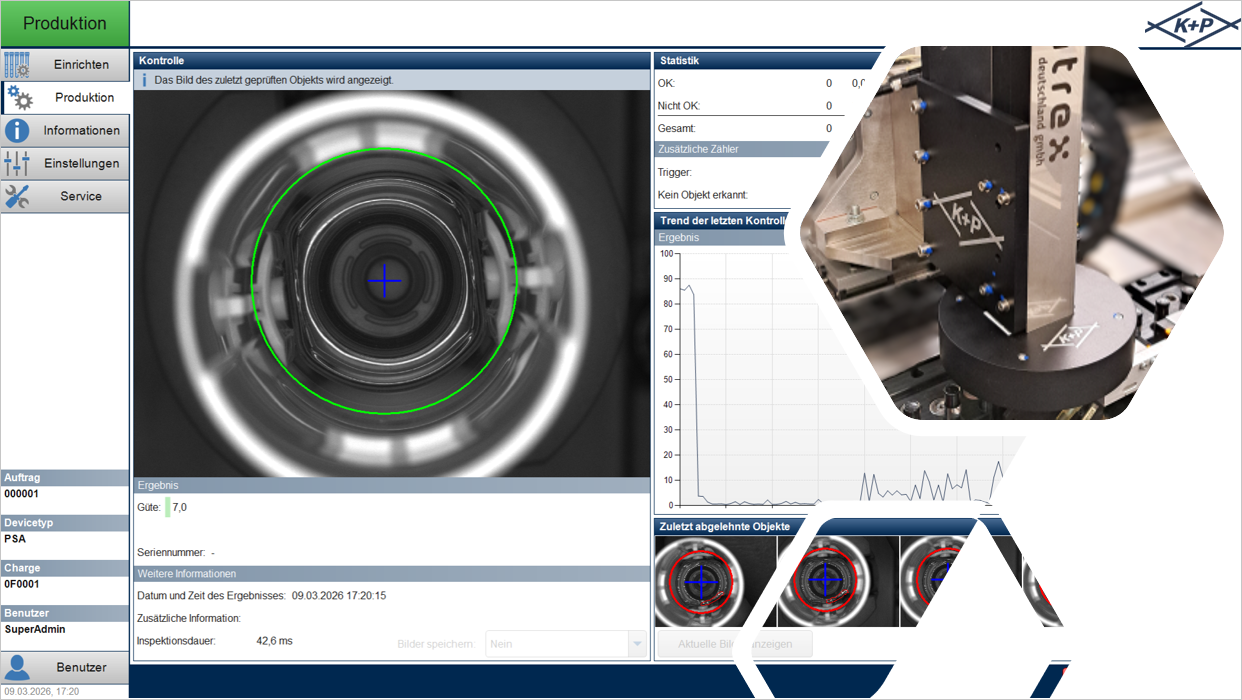
Our KUPvision Software and CCM101 (Compact Camera Module)
The system captures the containers using high-resolution industrial cameras and employs state-of-the-art, proprietary LED-based lighting units.
Analysis is performed using professionally trained deep learning models that inspect glass containers and critical areas for defects. These deep learning models are static and comply with the requirements of EU GMP Annex 22. Unlike rule-based image processing, the system learns from actual acceptable and defective parts, enabling it to reliably detect defect patterns that are highly variable or difficult to define via parameters. Defective containers are clearly classified and rejected.
This ensures consistent, objective quality assurance and reduces the risk of damaged containers entering the process.
Why Deep Learning?
Classic, rule-based image processing quickly reaches its limits when inspecting for glass breakage: Glass is transparent, reflects light, and presents widely varying appearances depending on geometry and lighting. Cracks and fractures vary in location, shape, and nature-defining fixed rules and thresholds in this context requires significant effort and often yields insufficient discrimination.
Instead, deep learning models learn directly from real image data what constitutes a defect. As a result, they reliably detect even vaguely defined or previously unknown types of defects, reduce false rejects (pseudo-rejects), and deliver consistent detection performance - even under fluctuating glass and process conditions. Detection capabilities can be further improved in a targeted manner as the volume of data increases.
Technical specifications:
- Our KUPvision Software complies with FDA 21 CFR Part 11 and EU GMP Annex 22 regulations
- AI-based defect detection using trained deep learning models
- 100% inline inspection of vials and syringes at a throughput of up to 650 units/min
- Detection of cracks, fissures, spalling, and fractures on the glass body, shoulder, and flange.
- High detection rate even with variable and complex defect patterns
- Manual, continuous optimization possible through retraining with new image data.
- Complete test data acquisition for documentation and traceability
- Integration into existing filling, assembly, and packaging lines
Glass breakage detection in production
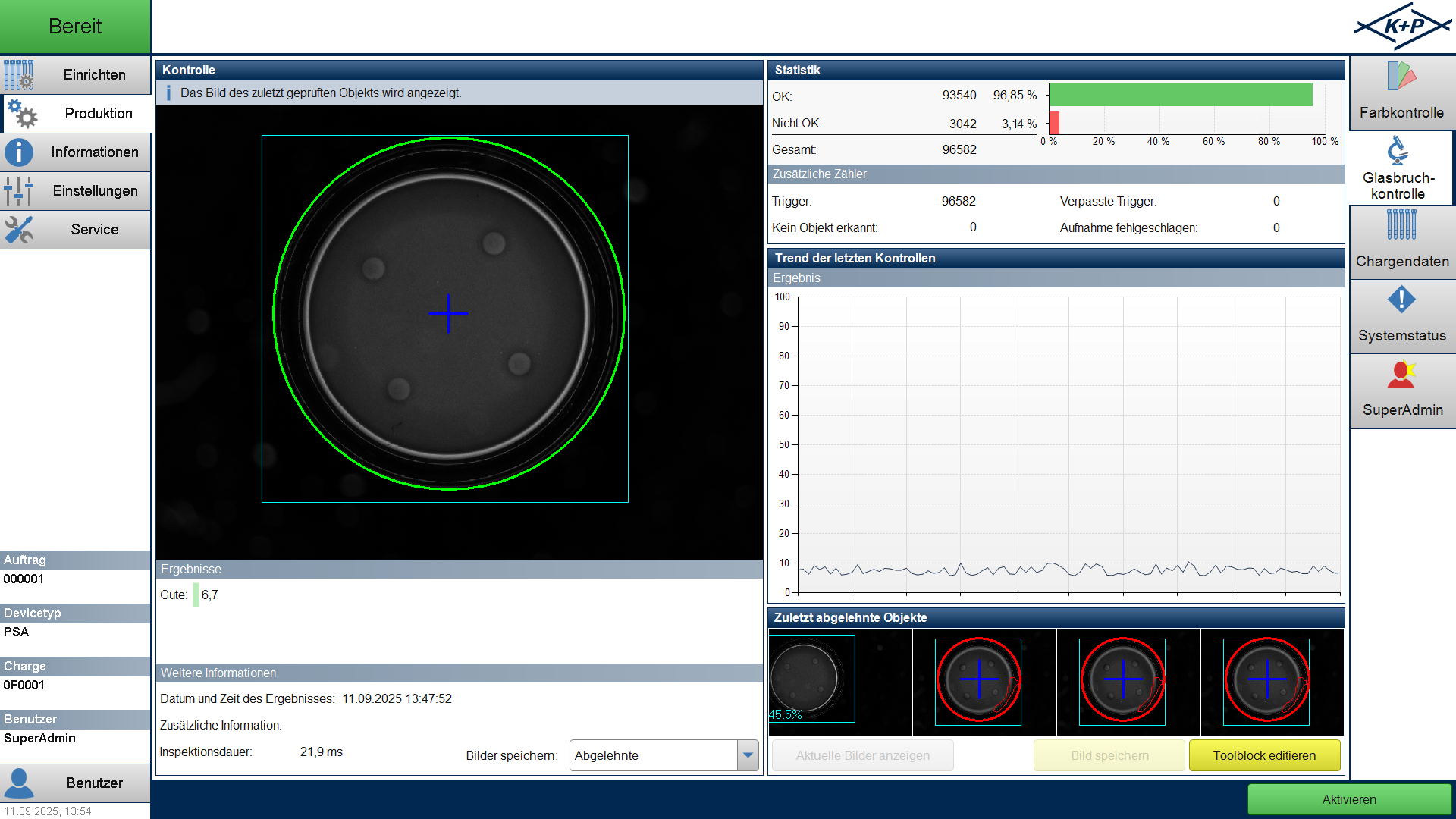
KUPvision as the heart of the system in vial production
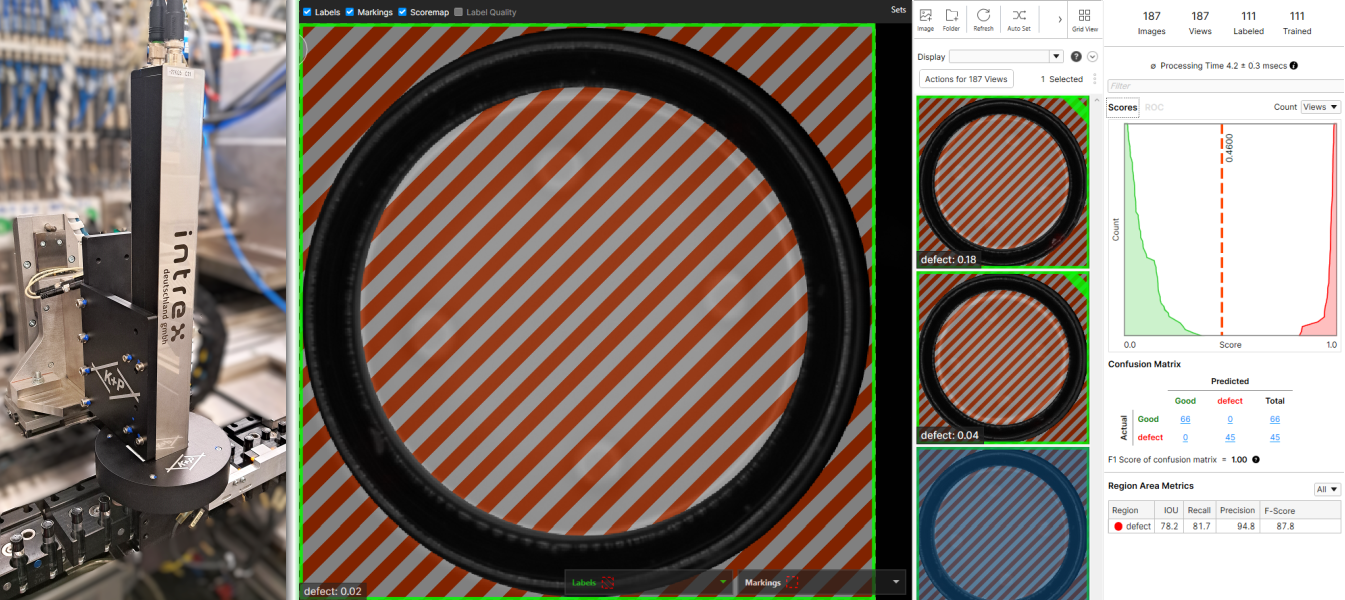
Vial glass breakage inspection with our CCM101 camera unit
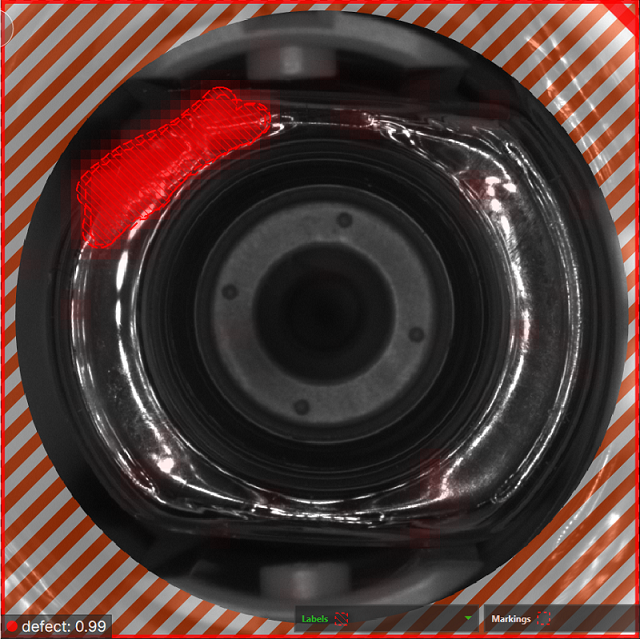
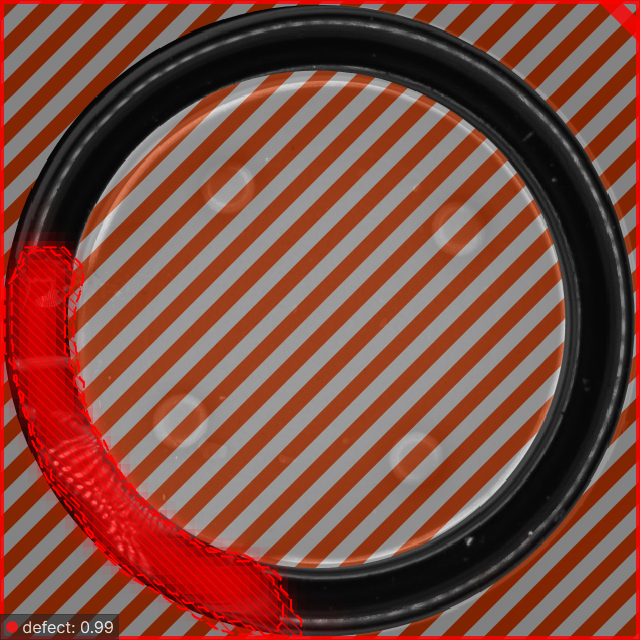
DL training images with result graphics:
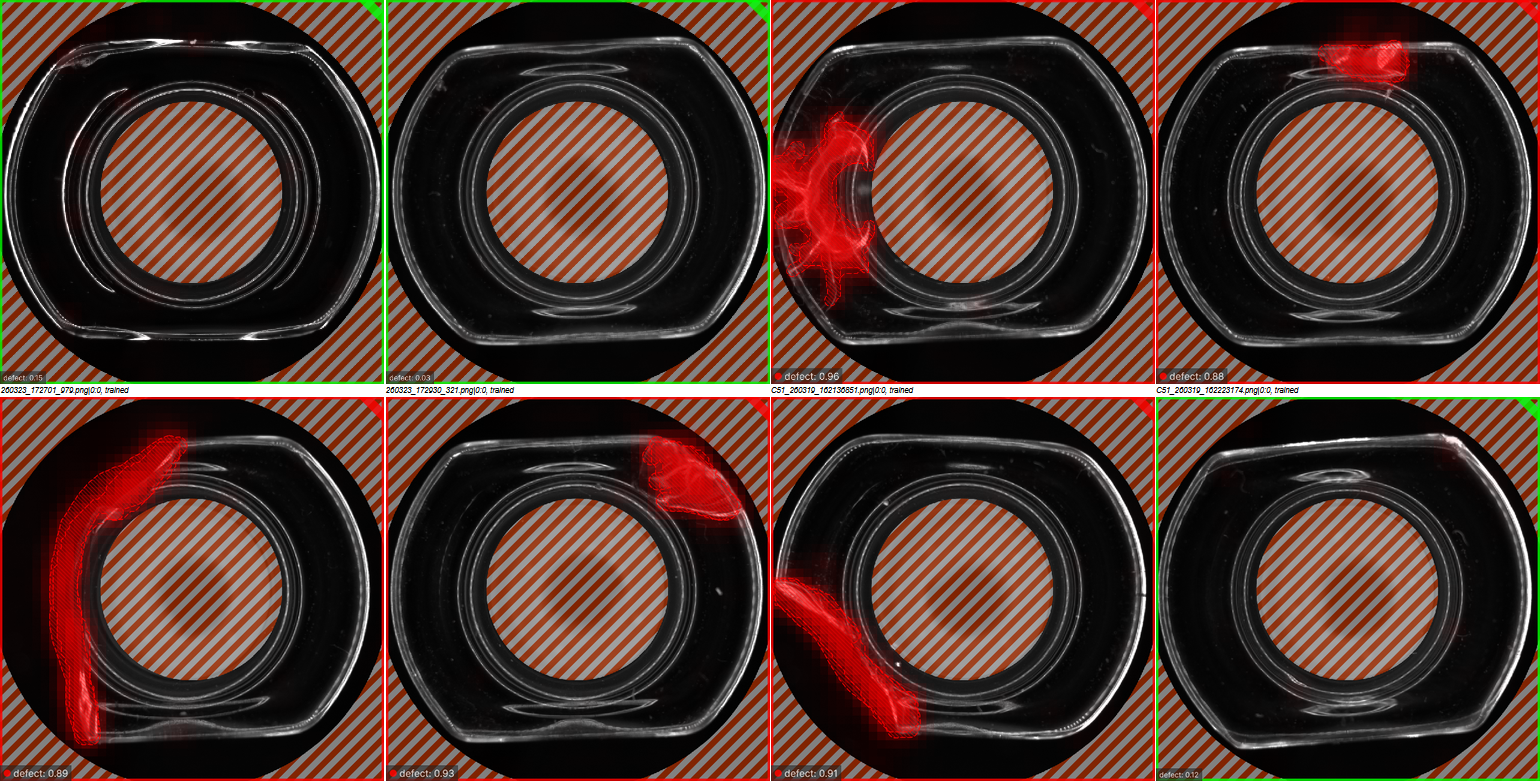
Injection training images with result graphics
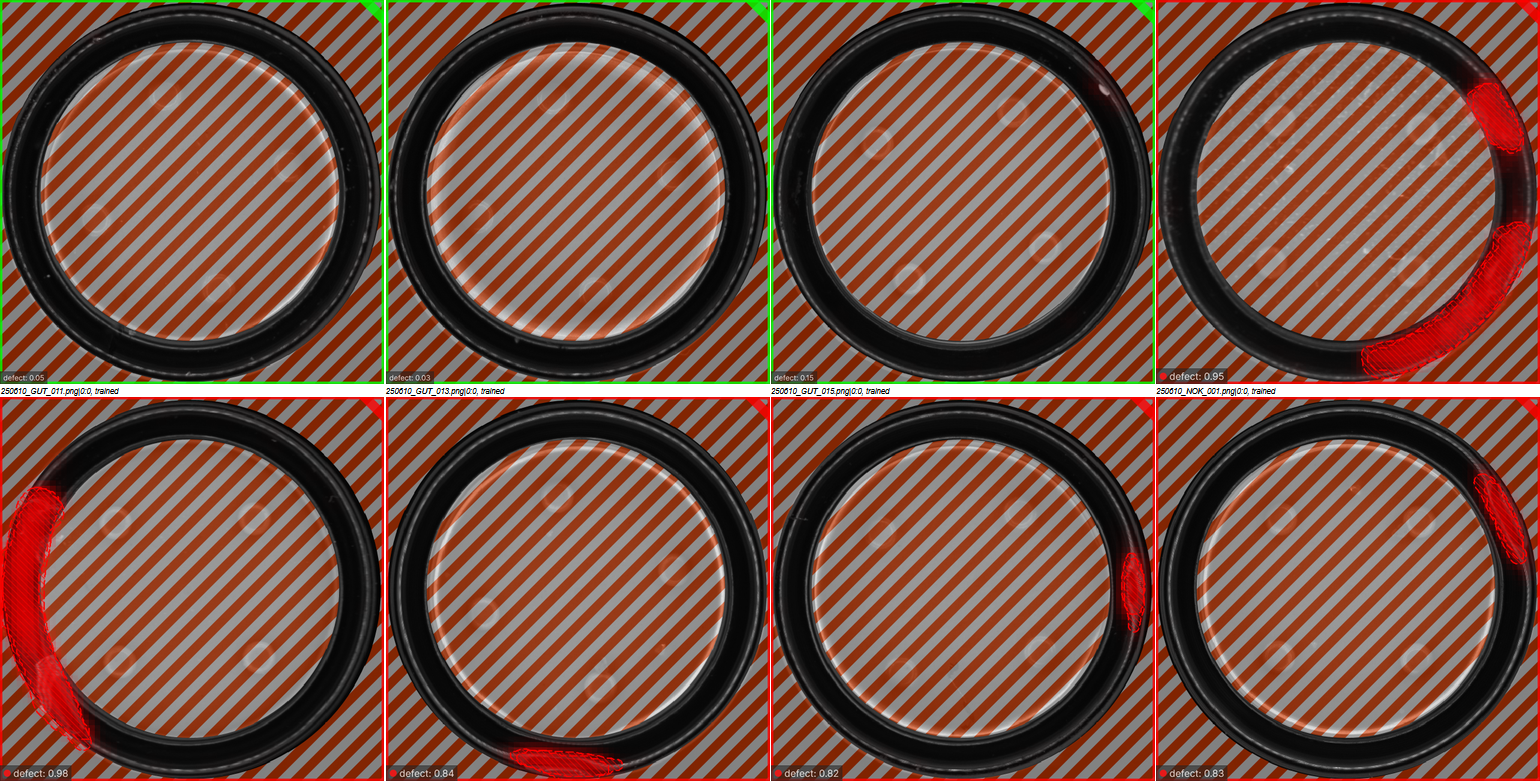
Vial training images with result graphics
Crucial for model creation is a clear distribution between good and bad images:
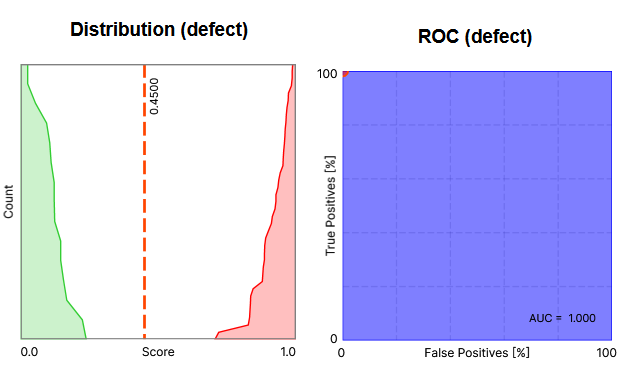
Distribution upon injection
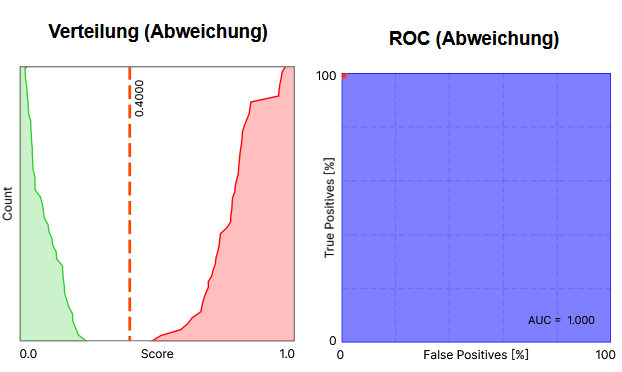
Distribution in vials
Unlike conventional machine vision - which is excellent for products with a uniform appearance - deep learning represents a new approach to industrial machine vision. Deep learning employs neural networks to detect defects, analyze errors, and locate and classify objects. To achieve this, the system is trained using images of flawless products and, where necessary or desired, defective ones. In essence, a neural network learns what a product should look like based on examples; during the inspection process, it can then distinguish between a good part and a defective one, while accounting for expected variations.